Sunday, November 07, 2010

Kathryn Albertson Park - Boise, Idaho

Kathryn Albertson Park is a 41 acre oasis within the sight of downtown Boise and was designed to be an attractive home for resident and migratory wildlife.  It is named after the wife of supermarket magnate, Joe Albertson and features wide, paved footpaths which wind through the park carrying walkers past colorful, informative signs inlaid in large rocks.  The signs describe wildlife and environmental themes throughout the park.  Highlights include outdoor gazebos, a fountain, a cross-section of the world's largest Ponderosa Pine, glimpses of wildlife, including a large population of nesting waterfowl, and access to the Greenbelt.

The Park Vegetation was chosen for its diversity in plant size, growth, and type -- offering food from the ground level to tree tops as well as nesting cover and protection.

I can't help thinking that the plants were also chosen for their wide variety of colors in the Spring and Fall of the year. Colors that seem to change by the hour. I visit the Park dozens of times throughout the year and I never cease to be amazed at what I see. Here are a few photos from the Autumn of the year.


Shallow ponds warm quickly in spring and stimulate the growth of aquatic insects and plants, which in turn become food for many kinds of wildlife. Islands in the ponds offer loafing and roosting spots for ducks and shelter nesting birds from predators.


Lily Pads reflect an early morning light and the fall colors of the nearby trees.


The colors appear to change by the minute and certainly from year to year. They can be very subtle and bright at the same time.


A Canada Goose enjoys a swim in the reflective light of the early morning.
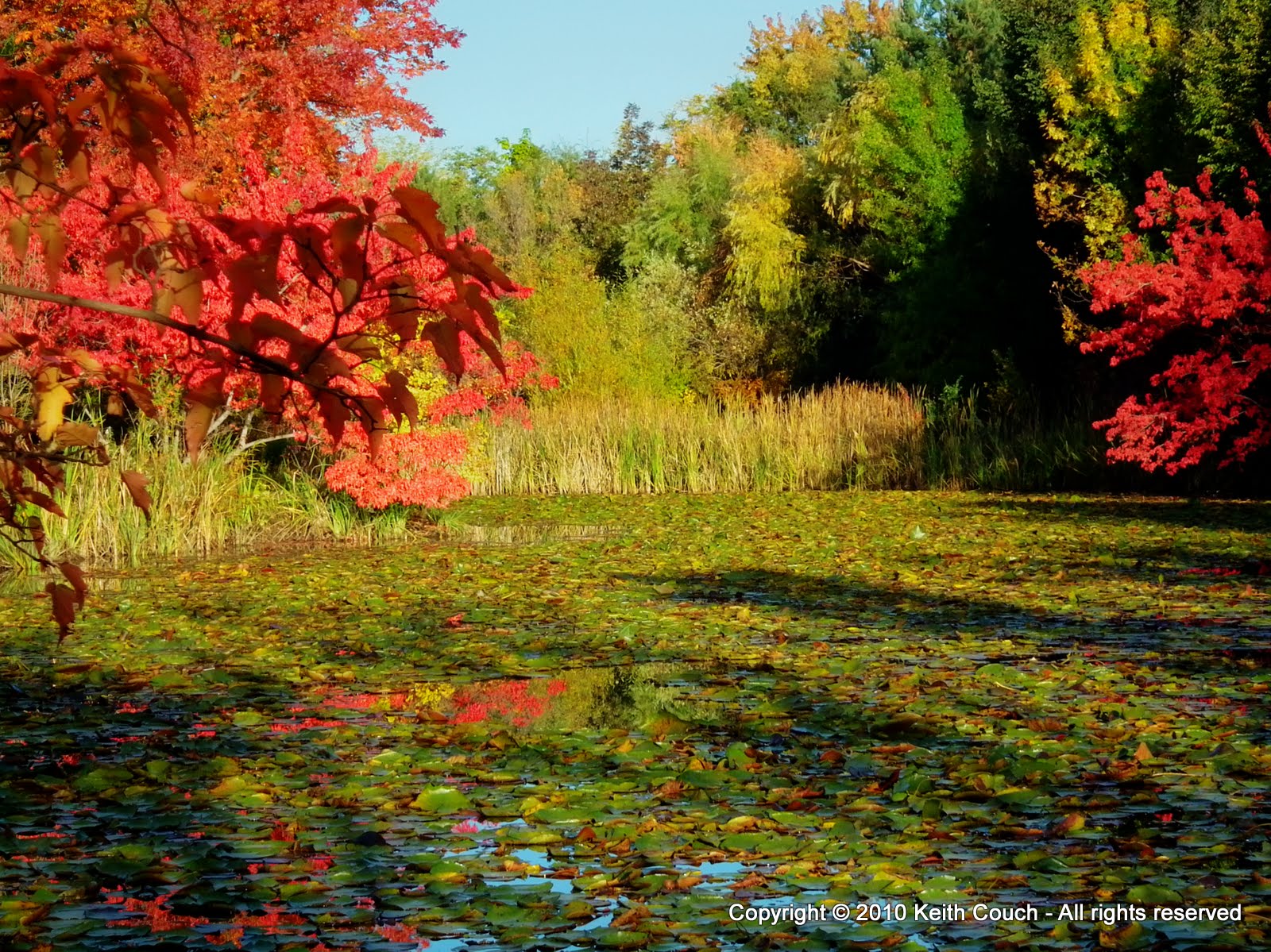

Early morning light streams across a pond of lily pads, reflecting the colors of the near-by trees in the open water.


Open water reflects the colors of the near-by trees and the sky. Shadows and light beams create a calming effect on the water.


Whatever the time of year, you will find a respite from the hurry of everyday life as you explore Kathryn Albertson Park in Boise, Idaho.

Friday, October 08, 2010

Bear River Migratory Bird Refuge

Bear River Migratory Bird Refuge in Northern Utah is an amazing place. About 300 species of birds occupy these wetlands during the year in numbers that range from 12 to 18 million birds. I have made three trips in the last three months -- my goal is to go at least once a month during the next year and photograph the seasonal activities of the birds as they migrate through the area.


An avocet foraging for food in the late afternoon of early October.


Three cormorants relaxing on a log.

An image to fill your soul.

Animals of Yellowstone

On a recent trip to Yellowstone National Park, I was fortunate enough to see many animals in their native and natural habitat -- doing what wild animals do -- survive as best they can. We sometimes forget the circle of life that goes on in nature. For a bear or wolf to remain healthy they must find the appropriate meal -- either by hunting and killing another animal or feasting on the remains that other predators have left behind.

Here are a few of the animals of Yellowstone.

A red-tail hawk sits watchfully in a tree searching for his next meal.

A prong-horned antelope runs free.

A healthy bull elk surveys the pre-dawn mountainside.

A lone wolf is moving in on an abandoned elk carcass.
Success!
An eagle moves in to share the bounty.
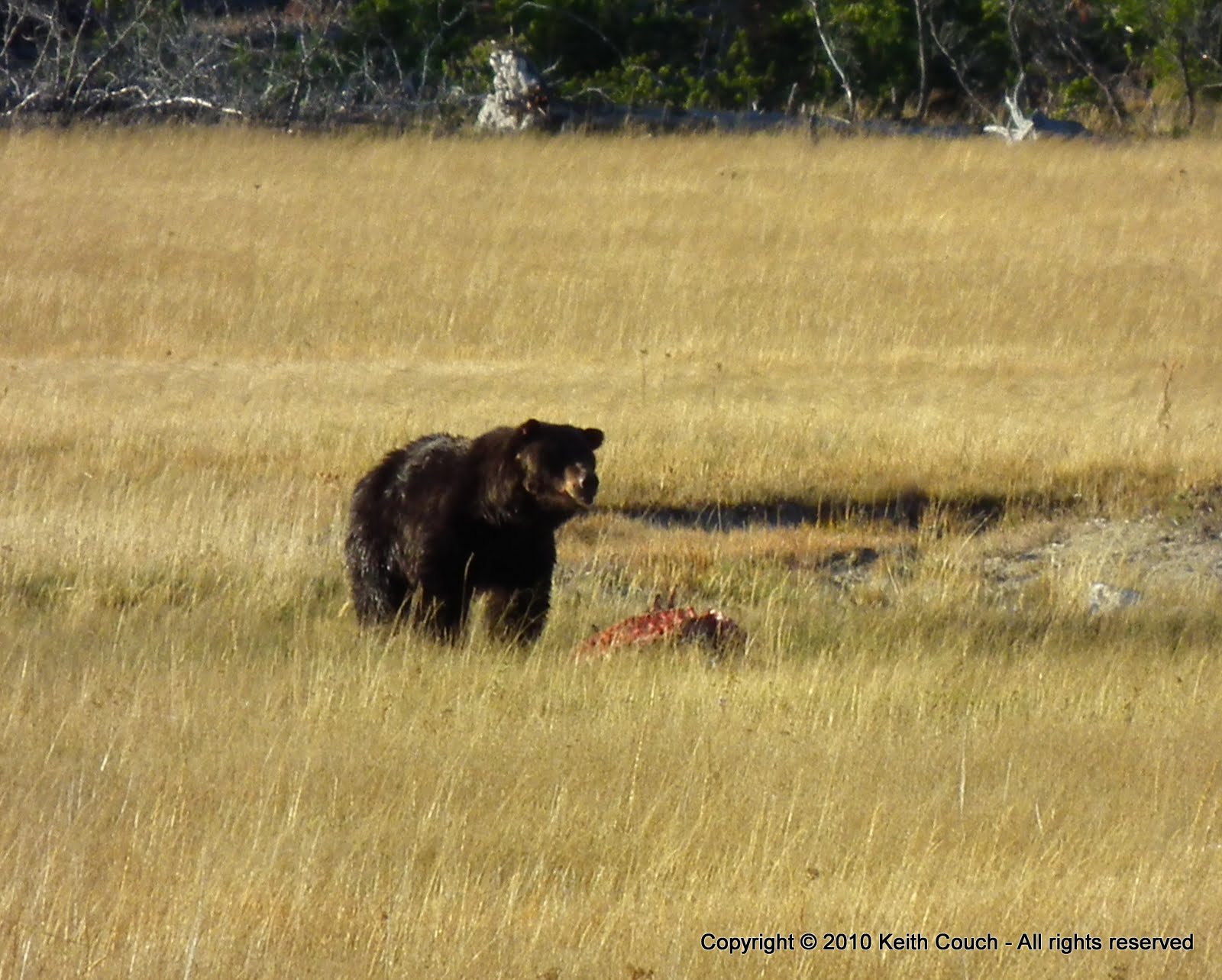
Two wolves move in to challenge a black bear who has also smelled the carcass. They think better of it and leave.

Stocking up on protein to build winter fat.


I enjoyed watching and photographing the animals of Yellowstone. I saw many species of waterfowl, raptors, birds of the field and  many healthy mammals. The beauty of the park never ceases to amaze me and the circle of life continues.

Sunday, October 03, 2010

Early October at Shoshone Falls on the Snake River in Idaho

I recently took a day trip to Shoshone Falls, near Twin Falls, Idaho. The falls change from year to year and month to month, depending on the amount of water flowing in the Snake River. I am presenting three of my images for your enjoyment.


Sometimes called the "Niagara of the West," Shoshone Falls is 212 feet (64.7 m) high -- 36 feet (10.97 m) higher than Niagara Falls -- and flows over a rim 900 feet (274 m) wide.


A park overlooking the waterfall is owned and operated by the City of Twin Falls. Shoshone Falls is best viewed in the spring as diversion of the Snake River for irrigation often significantly diminishes water levels in the summer and fall.


Shoshone Falls has existed at least since the end of the last ice age, when the Bonneville Flood carved much of the Snake River canyon and surrounding valleys. It is a total barrier to the upstream movement of fish. The falls were the upper limit of sturgeon, and spawning runs of salmon and steelhead could not pass the falls. Yellowstone cutthroat trout lived above the falls in the same ecological niche as Rainbow Trout below it. Due to this marked difference, the World Wide Fund for Nature used Shoshone Falls as the boundary between the Upper Snake and the Columbia Un-glaciated freshwater eco-regions.

Thursday, September 30, 2010

Yellowstone National Park

The scenery and subject matter for photographers in the northwest and western United States is phenomenal! I recently spent 10 days visiting Yellowstone National Park and even though I have been there several times before, I never cease to be amazed at the physical beauty God has placed before us.

I managed to take about 3,500 exposures in those 10 days. I got some interesting animal shots with wolves, bear, elk, buffalo, eagles, crow and ravens -- each doing what they are supposed to do in the grand scheme of nature - each reminding me that the food chain is not linear, but a never ending cycle.

In the 10 days, I watched the fall colors race upon the scene with breath taking beauty as I learned an practiced new photographic techniques.


The Madison River at dawn's first light. For some reason (big smile) the Park is very quiet at this time of day.


A spider web near one of the thermals. Frost had gathered overnight and now with the first light of day the frost turned into thousands of small strands of pearls.


Stream near Old Faithful.


Lake Hebgen near the town of West Yellowstone.


Lake Hebgen and an approaching storm.


Beautiful thermals.


Geysers across the valley in the crisp early morning temperature.


What a great way to spend an early morning.


An area known as Virginia Cascades. The fall colors are highlighted in the early morning first light. 


Beautiful meadow stream near Virginia Cascades.