Saturday, December 25, 2010

In and around Boise

The historical Alexander House, located in Boise and built in 1897 by Idaho Governor Moses Alexander, the country’s first elected Jewish Governor and former Mayor of the City of Boise

Idaho State Capitol on Christmas Eve 2010

Idaho State Capitol on Christmas Eve 2010 with the State Christmas Tree.

Boise, Idaho Christmas Eve 2010.

State Christmas Tree - Christmas Eve 2010.

Total Lunar Eclipse

I've been looking forward to this night for several months, hoping that the skies would cooperate and the moon would be visible. Early in the week we received quite a bit of rain and the early forecast stated that it would continue for days. The skies cleared and the winds blew, but the heavens were visible. I drove out toward Swan Falls to be away from the light pollution of the city and set up my camera. I did a lot of experimenting, taking exposures from 4 to 30 seconds. The skies were clear, but it was cold and windy.


Wednesday, December 15, 2010

M.K. Nature Center

The Morrison Knudsen (M.K.) Nature Center offers a one-of-a-kind fish and wildlife experience on a 4.6-acre site along the Boise River Greenbelt near downtown Boise. The Nature Center's stream walk and education building provide a glimpse of Idaho's many landscapes and abundant wildlife. The underwater viewing windows along the stream walk give visitors a fish-eye view of the world.

The Nature Center opened in July of 1990 and represents the cooperative work of private, public, state and federal contributors. Dedicated in 1990 as a Centennial gift to the state of Idaho, the area was conceived and developed by local volunteers working with the Idaho Department of Fish and Game. Although the Morrison Knudsen Corporation was a major contributor to the construction of the center, completion of the center would not have been possible without the donations and dedication of many other contributors.


The Nature Center is now owned and operated by the Idaho Department of Fish and Game with funding from hunting and fishing license dollars, non-game money, grants from the U.S. Fish and Wildlife Service and donations from private individuals and businesses. Thanks to the cooperative efforts of the department and the community, the MK Nature Center welcomes about 300,000 visitors and provides tours for about 15,000 school children, annually.

The Nature Center is now an integral feature of the City of Trees, particularly the Greenbelt "neighborhood" that includes Zoo Boise, the Discovery Center, Kathryn Albertson and Julia Davis Parks, the Idaho State Historical Museum, the Boise Art Museum, the Idaho Botanical Gardens and the Idaho Shakespeare Theater.


Wood ducks are year round inhabitants of the Nature Center. A favorite viewing spot is the large trout pond next to the Green Belt pathway. The male wood ducks are the most colorful, appearing to be painted.

It is very difficult to photograph the wood ducks because they are so skittish. They are rarely stationary for any period of time, avoiding people as best they can. A tripod and a long lens are a must to be able to get good wood duck photos.
 M.K. Nature Center is a wonderful haven in the downtown area. You can easily feel that you are far from the everyday hectic life and enjoy watching the various animals that pass through or inhabit the Center.

There is a visitor center that caters to children with a number of "hands on" exhibits.


 They are open seven days a week and charge no admission. Once you visit the Center, you will return again and again.

Sunday, November 07, 2010

Kathryn Albertson Park - Boise, Idaho

Kathryn Albertson Park is a 41 acre oasis within the sight of downtown Boise and was designed to be an attractive home for resident and migratory wildlife.  It is named after the wife of supermarket magnate, Joe Albertson and features wide, paved footpaths which wind through the park carrying walkers past colorful, informative signs inlaid in large rocks.  The signs describe wildlife and environmental themes throughout the park.  Highlights include outdoor gazebos, a fountain, a cross-section of the world's largest Ponderosa Pine, glimpses of wildlife, including a large population of nesting waterfowl, and access to the Greenbelt.

The Park Vegetation was chosen for its diversity in plant size, growth, and type -- offering food from the ground level to tree tops as well as nesting cover and protection.

I can't help thinking that the plants were also chosen for their wide variety of colors in the Spring and Fall of the year. Colors that seem to change by the hour. I visit the Park dozens of times throughout the year and I never cease to be amazed at what I see. Here are a few photos from the Autumn of the year.


Shallow ponds warm quickly in spring and stimulate the growth of aquatic insects and plants, which in turn become food for many kinds of wildlife. Islands in the ponds offer loafing and roosting spots for ducks and shelter nesting birds from predators.


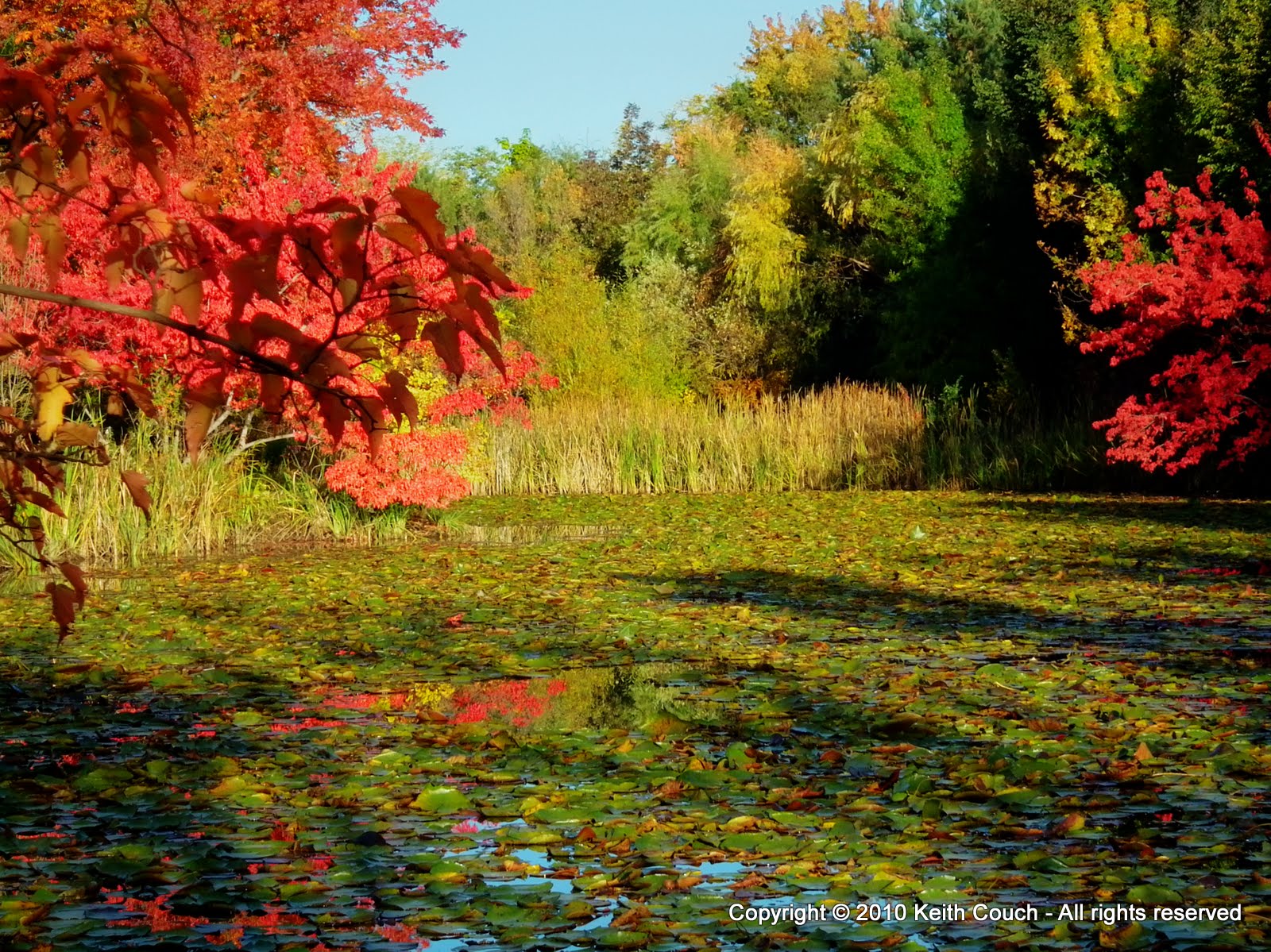
Lily Pads reflect an early morning light and the fall colors of the nearby trees.


The colors appear to change by the minute and certainly from year to year. They can be very subtle and bright at the same time.


A Canada Goose enjoys a swim in the reflective light of the early morning.


Early morning light streams across a pond of lily pads, reflecting the colors of the near-by trees in the open water.


Open water reflects the colors of the near-by trees and the sky. Shadows and light beams create a calming effect on the water.


Whatever the time of year, you will find a respite from the hurry of everyday life as you explore Kathryn Albertson Park in Boise, Idaho.

Friday, October 08, 2010

Bear River Migratory Bird Refuge

Bear River Migratory Bird Refuge in Northern Utah is an amazing place. About 300 species of birds occupy these wetlands during the year in numbers that range from 12 to 18 million birds. I have made three trips in the last three months -- my goal is to go at least once a month during the next year and photograph the seasonal activities of the birds as they migrate through the area.


An avocet foraging for food in the late afternoon of early October.


Three cormorants relaxing on a log.

An image to fill your soul.